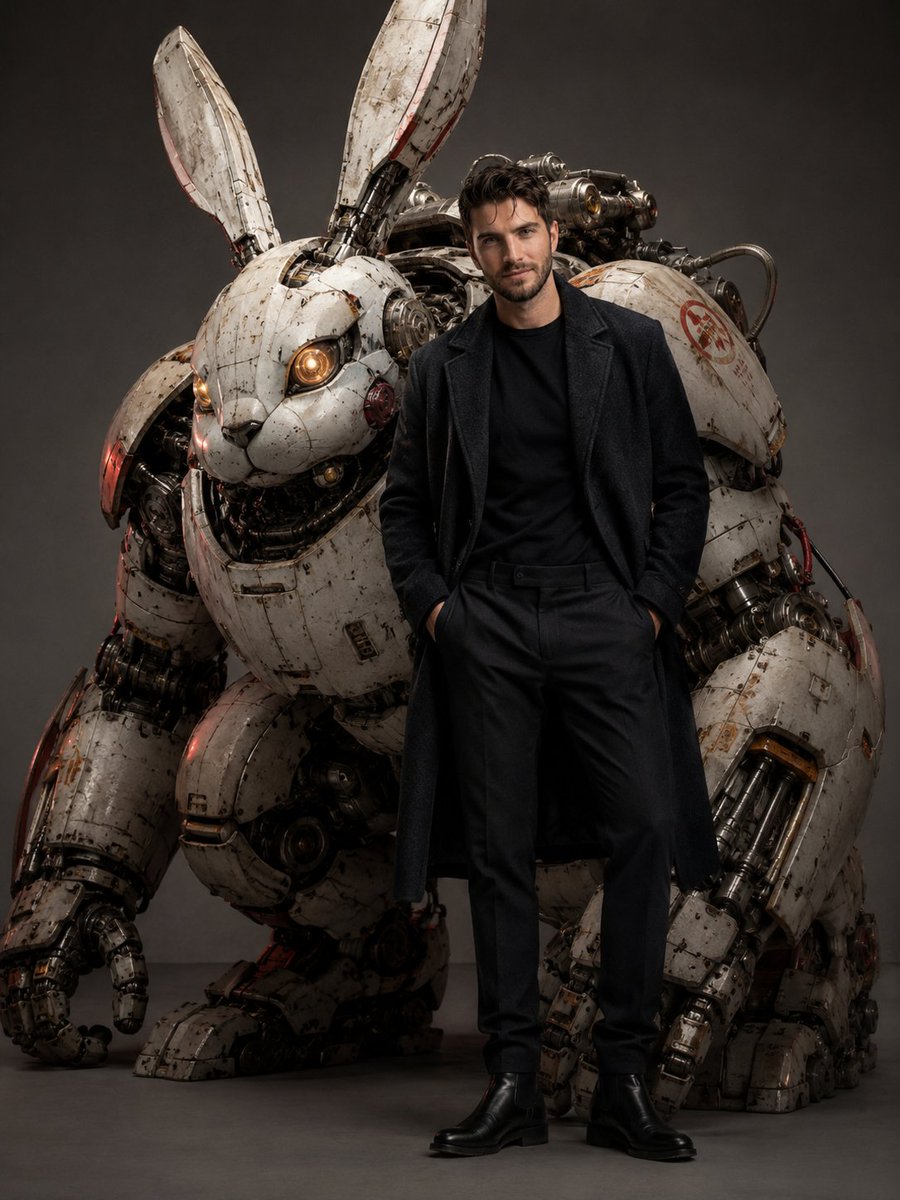
Dieselpunk Mecha Rabbit Companion
Prompt
The robot companion is a large weathered white rabbit-shaped dieselpunk mecha, towering slightly behind him, with long armored mechanical ears, glowing warm amber eyes, exposed hydraulic pistons, scratched ceramic-metal armor, red industrial markings, visible cables, gears, servo joints, worn paint, dust, oil stains, engraved warning labels, and collectible designer-toy proportions mixed with realistic military engineering.The robot should feel protective and loyal, positioned close behind the subject like a futuristic guardian.\n\nComposition: vertical full-body studio editorial, subject centered slightly to the right, robot occupying the left background and partially wrapping around the composition, strong hero-poster presence, clean negative space, premium fashion campaign framing. Camera at slightly low angle, 35mm lens, sharp focus on face and outfit, shallow depth of field on mechanical https://t.co/KvpuP6lKKK: soft neutral gray studio background, cinematic diffused key light from front-left, subtle red rim light reflecting on metal edges, soft shadow under the feet, realistic ambient occlusion, controlled highlights on fabric and armor. Color palette: ivory white, bone beige, scratched metal gray, muted crimson red, ash-blue hair accent, warm amber robot eye glow.Mood: masculine kawaii cyberpunk meets dieselpunk fashion editorial, futuristic streetwear, luxury concept design, high-end sci-fi magazine cover, cinematic collectible mecha aesthetic, visually powerful but clean and elegant.\n\nUltra-realistic cinematic image with hyper-detailed textures, 8K quality, professional color grading, realistic lighting, detailed fabric fibers, realistic skin pores, sharp mechanical detailing, natural anatomy, premium studio photography, masterpiece quality.Negative prompt: female body, feminine outfit, anime cartoon style, childish face, plastic skin, doll face, distorted anatomy, bad hands, extra fingers, missing fingers, deformed face, wrong facial identity, blurry face, low resolution, soft focus, overexposed, oversaturated, messy background, text, logo, watermark, random tattoos, full-arm tattoo, duplicated robot, broken limbs, unrealistic proportions, cheap CGI, toy-like human skin, flat lighting, bad fabric texture.
- Category
- Creative Use Cases
- Model
- GPT Image 2
- Creator
- RizwanAly07
- Source ID
- youmind-24150
Views3