瑞士几何风格音乐海报
Prompt
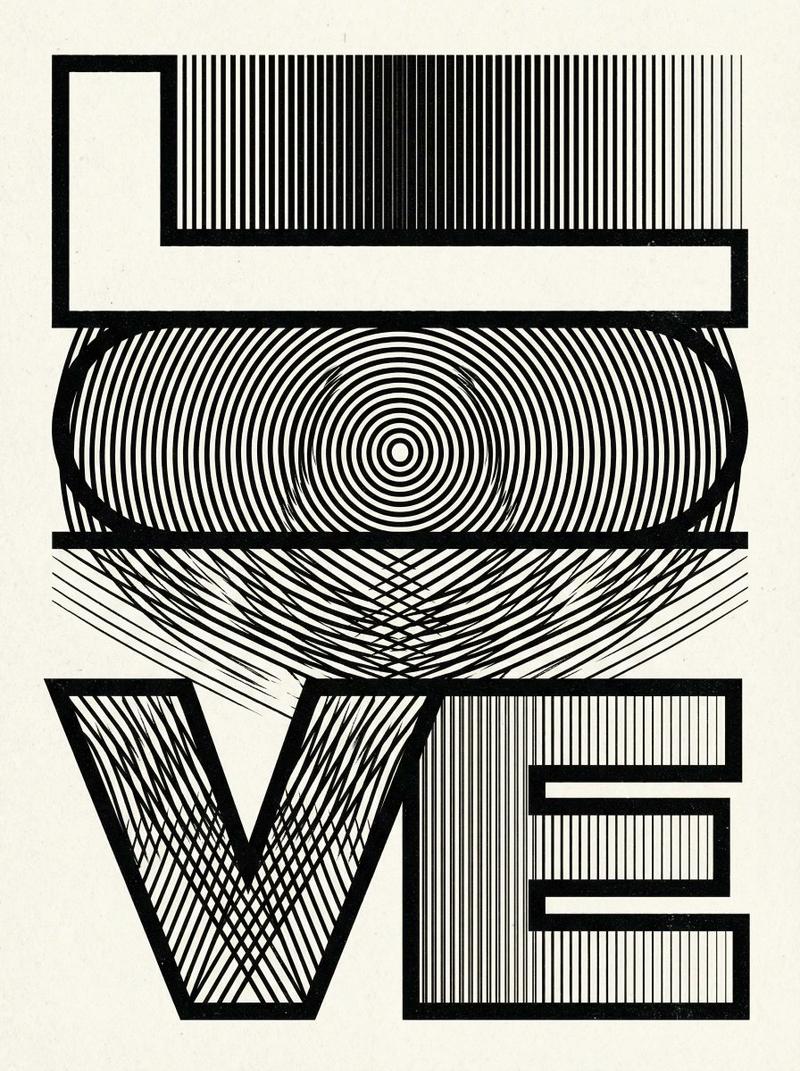
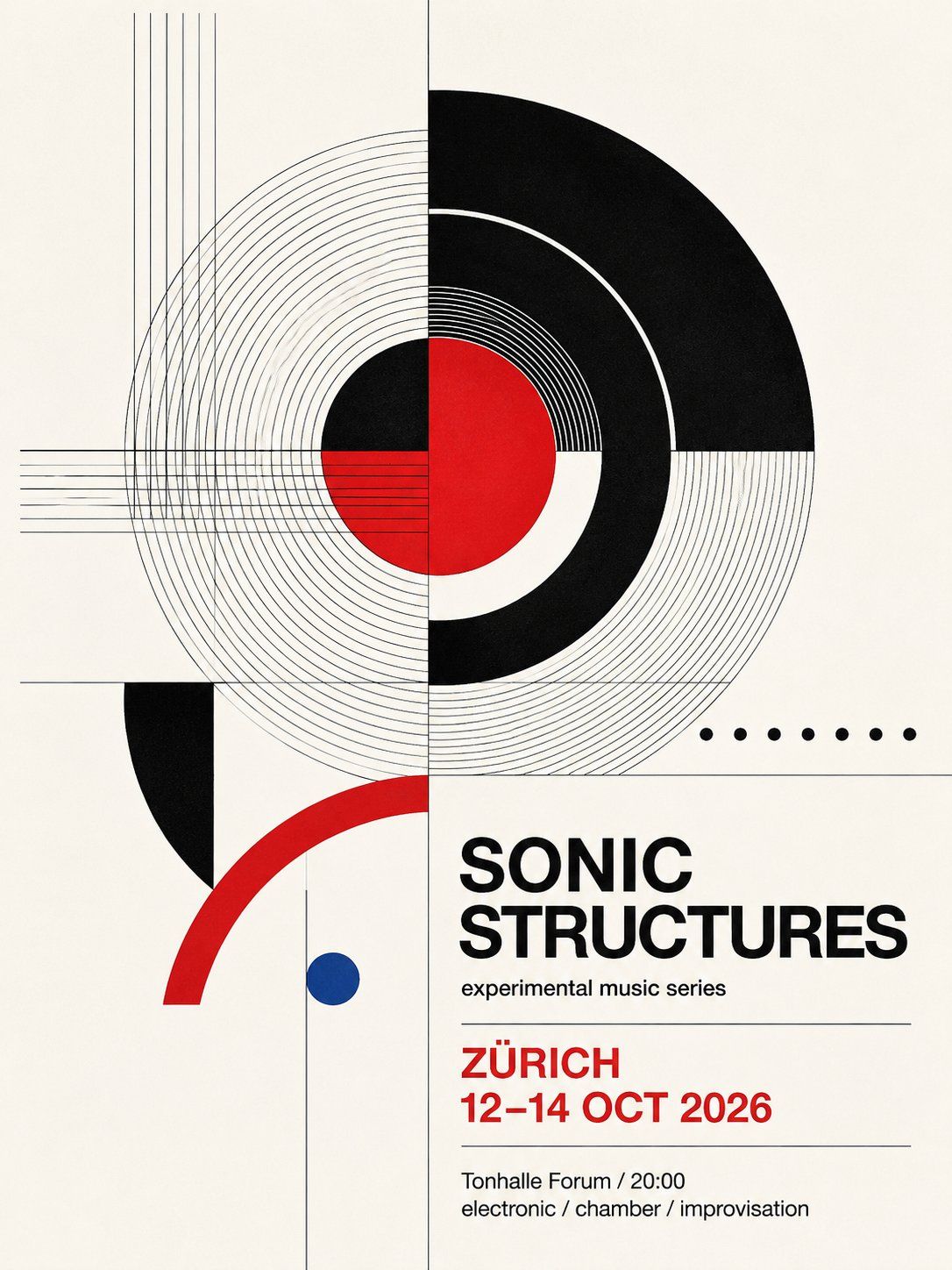
Goal: Create a clean Swiss modernist typography poster for an experimental music event, using precise geometric abstraction and bold asymmetrical layout.

Canvas: Vertical poster, 3:4 aspect ratio, warm off-white paper background with subtle print texture. Use a strict grid, thin gray construction lines, and high-contrast black, red, and one blue accent.

Layout: The composition is split by a thin vertical center line and a thin horizontal line across the lower third. The upper half contains a large abstract circular sound-wave motif centered slightly above the middle, crossing the vertical axis. The lower right contains the event typography block, aligned left. Leave generous negative space and keep the design crisp, flat, and print-like.

Geometric elements: Include exactly 7 main geometric feature groups: 1 large set of fine concentric gray circles around the center, 1 thick black partial ring on the upper right, 1 red central circle partially overlapped by white and black circular segments, 1 cluster of thin vertical gray lines near the upper left edge, 1 cluster of thin horizontal gray lines crossing from the left into the center, 1 thick red quarter-arc sweeping upward from the lower left, and 1 small solid blue circle below the main composition. Add exactly 7 small black dots in a horizontal row to the right of the main circle. Include a black semicircular shape cropped on the left side below the horizontal divider.

Text content: Set the main headline in bold uppercase black sans-serif: {argument name="headline text" default="SONIC STRUCTURES"}. Under it, add the small subtitle: {argument name="subtitle text" default="experimental music series"}. Below a thin divider line, set the location and date in bold red uppercase: {argument name="location" default="ZÜRICH"} and {argument name="date" default="12–14 OCT 2026"}. Below another thin divider line, add the small black details: {argument name="venue and time" default="Tonhalle Forum / 20:00"} and a final genre line reading "electronic / chamber / improvisation".

Visual style: Bauhaus-inspired Swiss International Style, experimental music festival poster, sharp vector geometry, balanced asymmetry, bold Helvetica-like typography, minimal palette of black, red, blue, gray, and off-white. Use clean flat shapes, no shadows, no photographs, no gradients, no decorative borders, no watermark.- Category
- Posters & Typography
- Model
- GPT Image 2
- Creator
- Roku|AI × BizDev
- Source ID
- 25719
- Published
- Jun 14, 2026
Views0