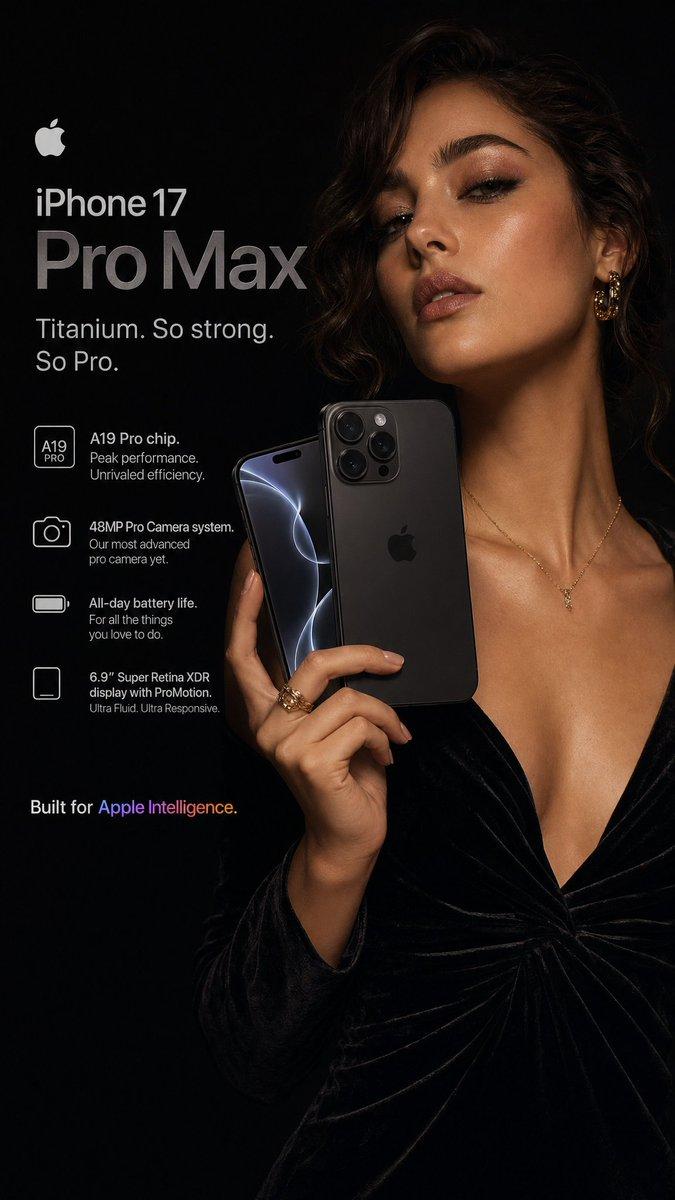
未来感智能手机产品广告
Prompt
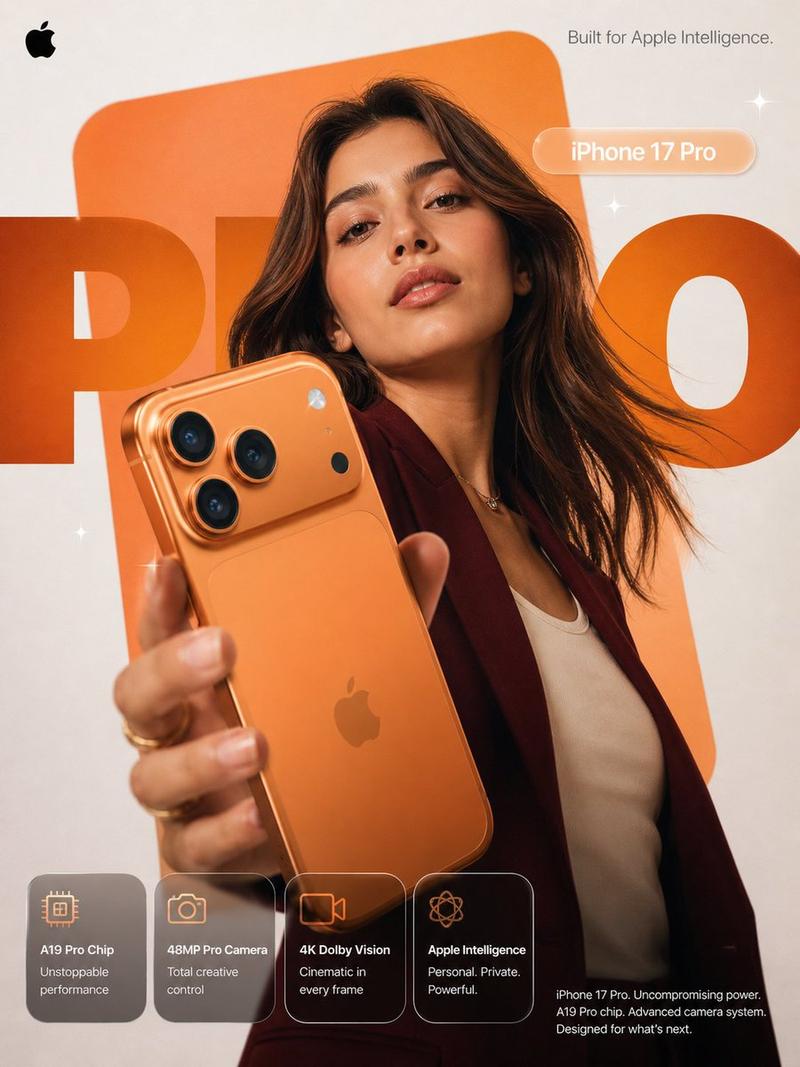
Ultra-realistic premium smartphone advertisement, featuring a confident young woman in her early 20s with fair skin and sharp facial features, wearing sleek black cat-eye sunglasses. She has long, thick braided hair styled into an extended oversized braid, colored in {argument name="color theme" default="soft lavender/purple"} tones matching the product theme.
She is captured in a dynamic low-angle cinematic pose, slightly twisting her torso while holding a {argument name="smartphone model" default="Xiaomi 17 Pro"} smartphone toward the camera in a bold hero shot with strong forced perspective, the phone dominating the foreground.
The smartphone features a matte metallic lavender/purple finish, minimalistic body with rounded corners, and a large rectangular camera module. The module includes two large camera lenses on the left, a circular secondary display on the right showing a minimal purple gradient clock UI, Leica branding near the camera, a clean flash strip, and subtle Xiaomi branding at the bottom.
Outfit: {argument name="outfit" default="fitted long-sleeve crop top in soft lavender/purple"}, paired with high-waisted muted grey/olive cargo pants, modern tech-fashion aesthetic.
Background: clean minimal gradient transitioning from light grey to soft lavender/purple tones, with subtle blurred large-scale typography for depth.
Lighting: soft studio lighting with neutral-to-cool tones, smooth skin illumination, controlled highlights on the phone edges, glossy reflections on camera lenses and display, minimal shadows, premium product photography style.
Composition: low-angle shot for a powerful look, subject positioned slightly left, phone dominating the right foreground, clean negative space for branding.
Futuristic UI overlays: thin minimal white/purple lines and nodes pointing to features with floating labels: “Leica Camera System” “Secondary Display Integration” “Ultra-Slim Premium Design”
Glassmorphism panel (bottom-left, soft purple tint) listing: “Flagship Performance” “Advanced AI Imaging” “Fast Charging” “Next-Gen Xiaomi AI”
Top corner text: “Xiaomi 17 Pro” in clean modern sans-serif typography.
Style: high-end flagship smartphone advertisement, futuristic, minimal, elegant.
Quality: 8K, ultra-detailed, sharp focus, HDR, cinematic commercial photography, realistic textures.- Category
- UI & Interfaces
- Model
- GPT Image 2
- Creator
- Anissa
- Source ID
- 28480
- Published
- Jul 12, 2026
Views4