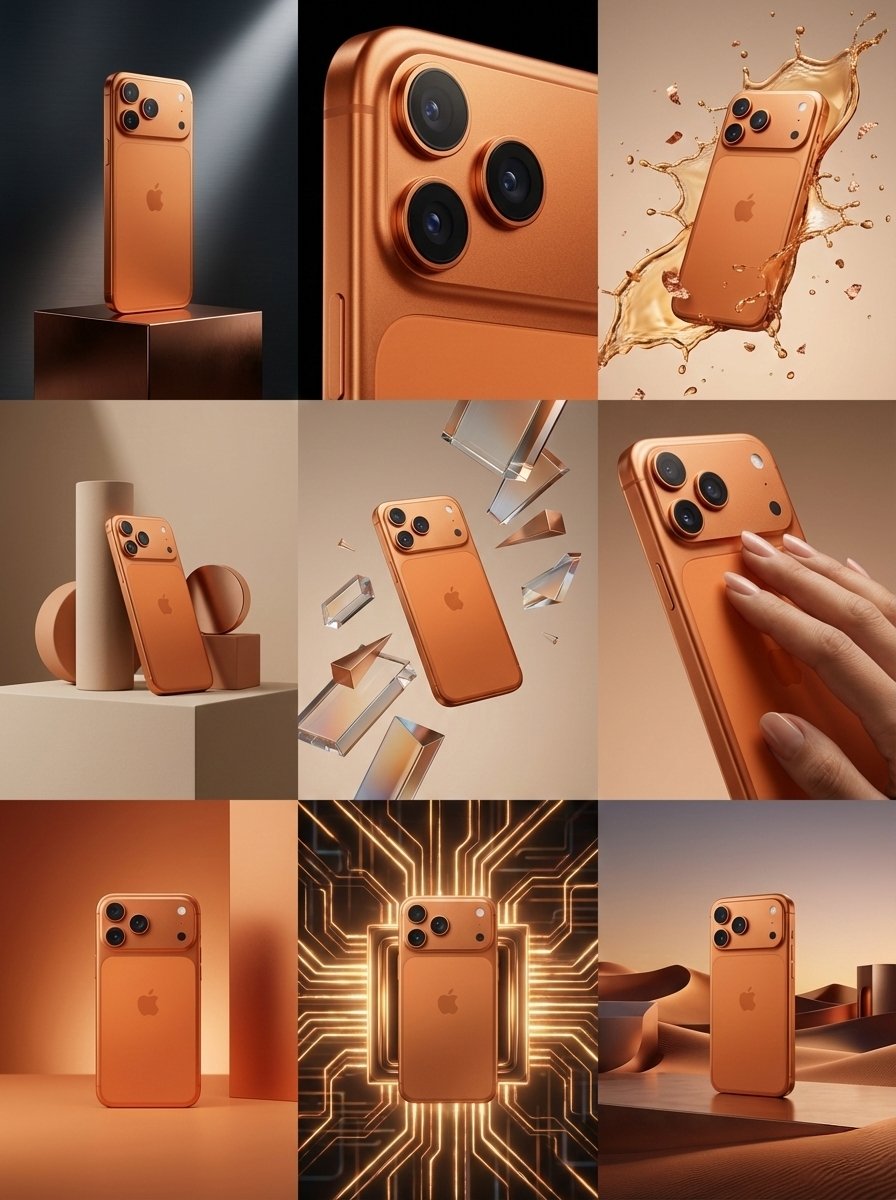
手机品牌9宫格视觉分镜设计
Prompt
A clean 3×3 storyboard grid with nine equal-sized panels and an overall 4:5 aspect ratio.

Use the reference image as the base product reference. Keep the same product, packaging design, branding, materials, colors, proportions and overall identity across all nine panels exactly as the reference. The product must remain clearly recognizable in every frame. The label, logo and proportions must stay exactly the same.

This storyboard is a high-end designer mockup presentation for a branding portfolio. The focus is on form, composition, materiality and visual rhythm rather than realism or lifestyle narrative. The overall look should feel curated, editorial and design-driven.

FRAME 1 (The Icon): The phone submerged in a shallow pool of amber-colored oil, with soft ripples distorting the edges and warm, diffused lighting. FRAME 2 (The Tactile): A close-up of the camera lenses with a single drop of golden liquid bead-ing on the sapphire glass surface. FRAME 3 (The Environment): An abstract backdrop of flowing silk in matching bronze tones, swirling behind the device. FRAME 4 (The Interaction): Golden light caustic patterns dancing across the back of the phone, mimicking the reflection of water. FRAME 5 (The Matrix): Multiple phones arranged in a circular fan pattern, shot from above, looking like a blooming metallic flower. FRAME 6 (The Gravity): The phone slowly sinking through a dense, viscous golden fluid, surrounded by tiny, suspended air bubbles. FRAME 7 (The Signature): Macro detail of the new antenna line, where the metal meets the frame, showing the seamless amber-toned injection molding. FRAME 8 (The Statement): The phone bisecting the frame, one half in deep shadow and the other half bathed in an intense, glowing orange light. FRAME 9 (The Horizon): The phone placed on a glowing light-box, the amber light bleeding around the edges, creating a halo effect.

CAMERA & STYLE: Ultra high-quality studio imagery with a real camera look. Different camera angles and framings across frames. Controlled depth of field, precise lighting, accurate materials and reflections. Lighting logic, color palette, mood and visual language must remain consistent across all nine panels as one cohesive series.

OUTPUT: A clean 3×3 grid with no borders, no text, no captions and no watermarks.
- Category
- Charts & Infographics
- Model
- Nano Banana Pro
- Creator
- @songguoxiansen
- Source ID
- 2284
- Published
- Jan 27, 2026
Views172