品牌全案概念提案板
Prompt
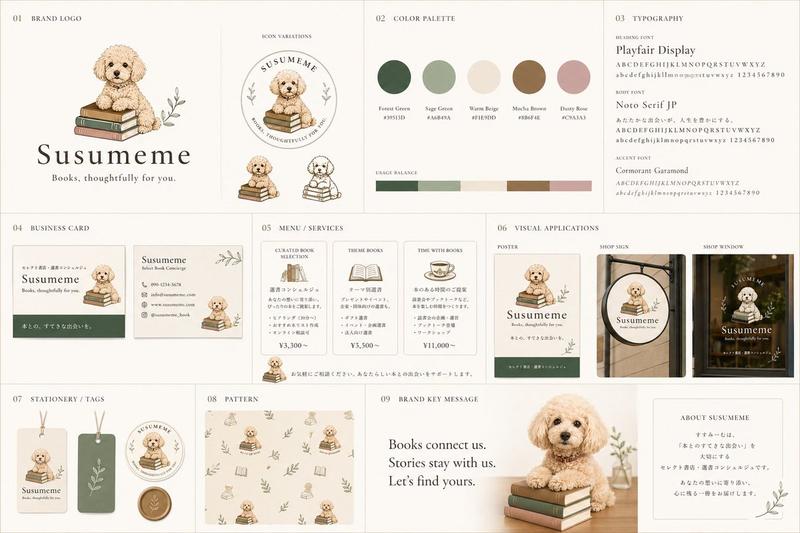
Please generate a highly finished "Brand Concept Proposal Board" in [Aspect Ratio].

[Basic Information]
Brand Chinese Name: [Brand Chinese Name]
Brand English Name: [Brand English Name]
Brand Category: [Brand Category] (e.g., Skincare / Fragrance / Hair & Body Care / Cosmetics / Tea & Drinks / Dining / Pets / Home, etc.)
Brand Core Concept: [Brand Core Concept]
Brand Slogan: [Brand Slogan]
Target Audience: [Target Audience]
Price Range / Positioning: [Brand Positioning]
Usage Scenarios: [Usage Scenarios]
Product Line / Core Product: [Product Line / Core Product]

[Visual Direction]
Overall Vibe: [Overall Vibe] (e.g., premium, minimalist, gentle, vintage, futuristic, natural healing, urban, trendy, etc.)
Primary Color: [Primary Color]
Secondary Color: [Secondary Color]
Accent Color: [Accent Color]
Material Keywords: [Material Keywords] (e.g., frosted glass, matte paper box, embossed paper, gold foil stamping, transparent acrylic, metal hardware, etc.)
Supporting Graphics Direction: [Supporting Graphics Direction] (e.g., geometric shapes, botanical line art, water ripples, bubbles, mist, linear flowing graphics, icon systems, etc.)

[Visual Goal]
This is not a standard product poster, an e-commerce detail page, or a single packaging render. It is a highly finished "Brand Concept Proposal Board". The visual should reflect the first-round holistic proposal feeling of the brand's transition from concept to visual realization, ideal for early-stage visual direction exploration.

[Visual Elements to Include]
1. Brand Main Header Area:
- Brand Chinese Name
- Brand English Name
- Slogan
- A concise brand concept statement

2. Brand Identity Area:
- Logo direction display
- Typography styling
- Brand colors / color palette swatches
- Supporting graphics display

3. Central Key Visual Area:
- Centered around the [Core Product / Product Line], showcasing a high-texture product packaging mockup set
- Includes the main product, outer packaging box, and series combination
- Product appearance, labels, typography, and materials should be unified, presenting a complete brand system feel
- This serves as the visual centerpiece of the entire board

4. Information & Description Area:
- Showcase product selling points / core keywords / usage scenarios / sensory experience
- Keep info concise, clear, and presentation-like, avoiding clutter
- Primarily in Chinese, with English as secondary support

5. Brand Collateral Extension Area:
- Display brand collateral mockups, such as shopping bags, cards, stickers, gift boxes, promotional cards, menus, merchandise, labels, bottle stickers, social media tiles, etc.
- Choose reasonably based on the brand category; do not force all items mechanically

6. Hand-drawn Annotations Area:
- Incorporate a moderate amount of hand-drawn style annotations, arrows, sketch-like explanations, and small notes
- Give it the feel of a designer's pitch board
- Handwritten annotations should be clear, natural, refined, and not messy

[Layout Requirements]
- The overall layout is a horizontal or vertical brand proposal board, recommended aspect ratio: [Aspect Ratio]
- The layout should feel designed, branded, presentation-ready, and editorial/magazine-like
- Clear reading hierarchy: brand info at the top -> main product in the center -> information modules on left/right -> collateral extensions at the bottom
- Balanced use of negative space, neither too empty nor too crowded
- Information modules should be clearly distributed, resembling a concept board submitted by a professional design agency

[Style Requirements]
- Premium, clear, clean, and high-quality aesthetic
- Text should be as legible, accurate, and natural as possible
- No obvious gibberish characters, no low-quality textures, no cheap e-commerce styles
- Avoid being overly flashy; do not make it look like a generic PowerPoint slide
- It should present the feel of a real brand pitch rather than a simple collage

[Additional Requirements]
- Automatically match appropriate packaging forms, visual elements, and usage scenarios based on the [Brand Category] and [Brand Core Concept]
- If the information provided by the user is incomplete, reasonably fill in the blanks without deviating from the direction
- The overall output should resemble a "concept proposal board / visual mood board" rather than a complete brand guidelines manual
- Category
- Charts & Infographics
- Model
- ChatGPT
- Creator
- @MrLarus
- Source ID
- 14737
- Published
- May 20, 2026
Views88