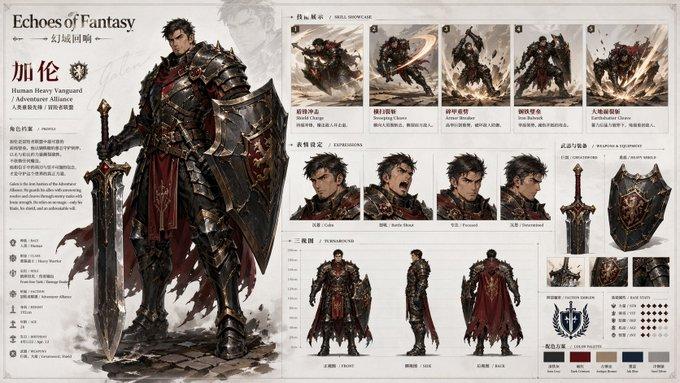
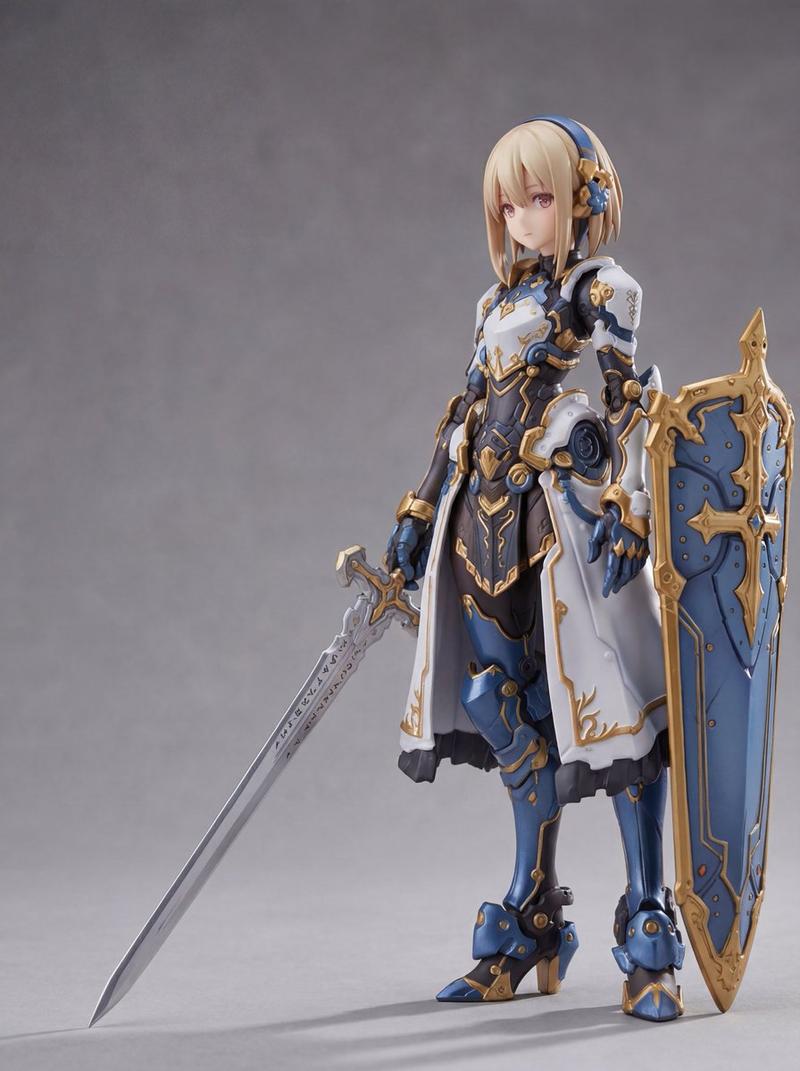
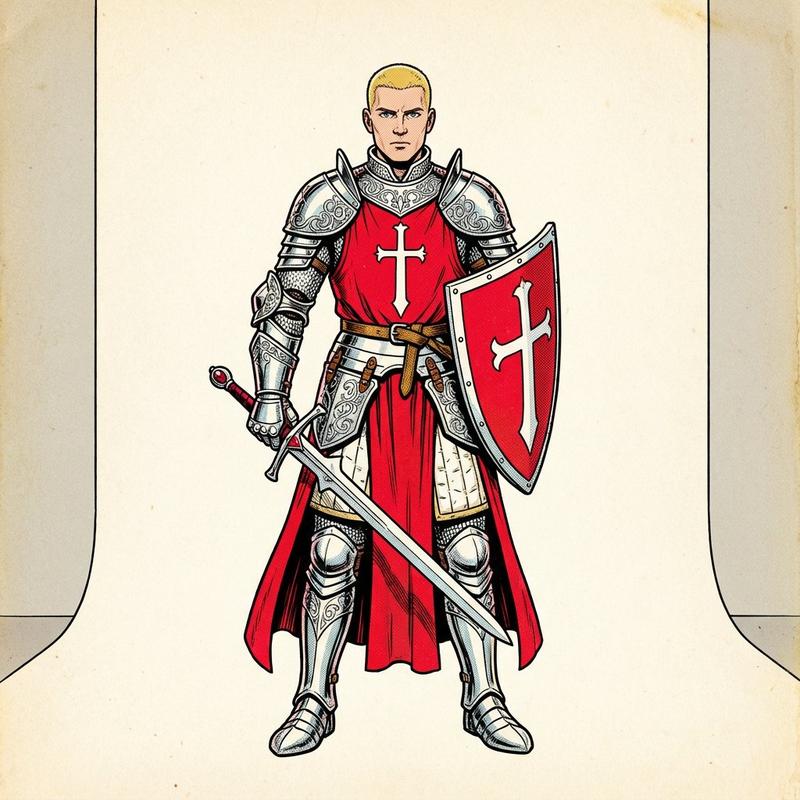
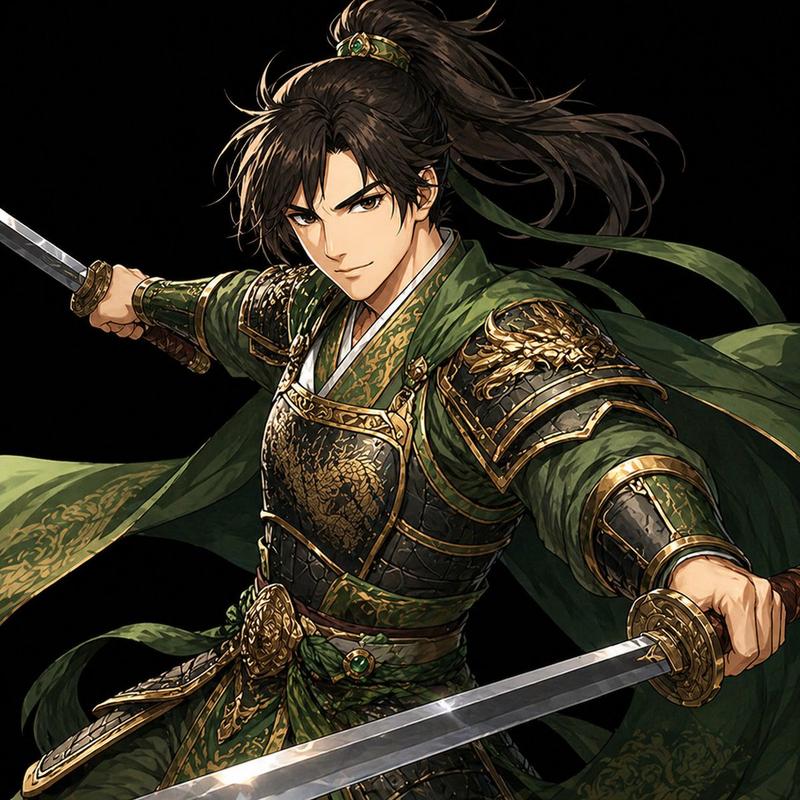
奇幻骑士角色三视图
Prompt
Goal: Create a high-end fantasy warrior character sheet for {argument name="character name" default="a young Japanese male knight"}, designed for AI drama or game production.

Canvas: Wide horizontal 16:9 composition, dark neutral gray studio background, realistic cinematic lighting, no decorative border. Divide the image into 4 vertical panels: 3 full-body turnaround views on the left and center, and 1 close-up portrait panel on the right.

Layout: Show exactly 4 character views. View 1: full-body front view, standing upright and facing camera, shield on the left arm and sword held downward in the right hand. View 2: full-body left side profile, sword angled downward and round shield visible on the arm. View 3: full-body back view, showing the cape and rear armor silhouette, sword held downward at the right side. View 4: close-up three-quarter bust portrait on the right, intense eye contact, sword raised diagonally across the chest in the foreground. Add a small white label near the bottom of the portrait panel reading exactly: {argument name="bottom label text" default="3 (GPT Image 2)"}.

Subject details: The warrior is a serious young adult man with {argument name="hair style" default="messy spiky black hair"}, sharp dark eyes, lightly weathered skin, and a stern focused expression. He wears ornate dark navy-black plate armor with bronze/gold trim, layered shoulder pauldrons, leather straps, metal gauntlets, greaves, black boots, and a tattered dark cloak. The chest armor has a circular sunburst emblem with a red jewel at the center. The round shield is dark blue and bronze with radial metal segments and a central red gem. The sword is an ornate silver fantasy blade with angular cutouts, gold accents, and several small red gem inlays.

Visual style: Hyper-realistic fantasy concept art, premium character turnaround sheet, detailed metal scratches, worn leather, subtle dirt and battle wear, realistic fabric folds, dramatic but controlled studio light, crisp focus, high resolution, cinematic realism similar to a AAA RPG character design.

Constraints: Keep the same character, armor, shield, cloak, and sword consistent across all 4 views. Use exactly 4 views and exactly 1 visible text label. Do not add extra characters, extra weapons, logos, watermarks, UI elements, or background scenery.- Category
- UI & Interfaces
- Model
- GPT Image 2
- Creator
- Komitsu@AIドラマ実写化
- Source ID
- 28836
- Published
- Jul 15, 2026
Views10