信息图可视化设计
Prompt
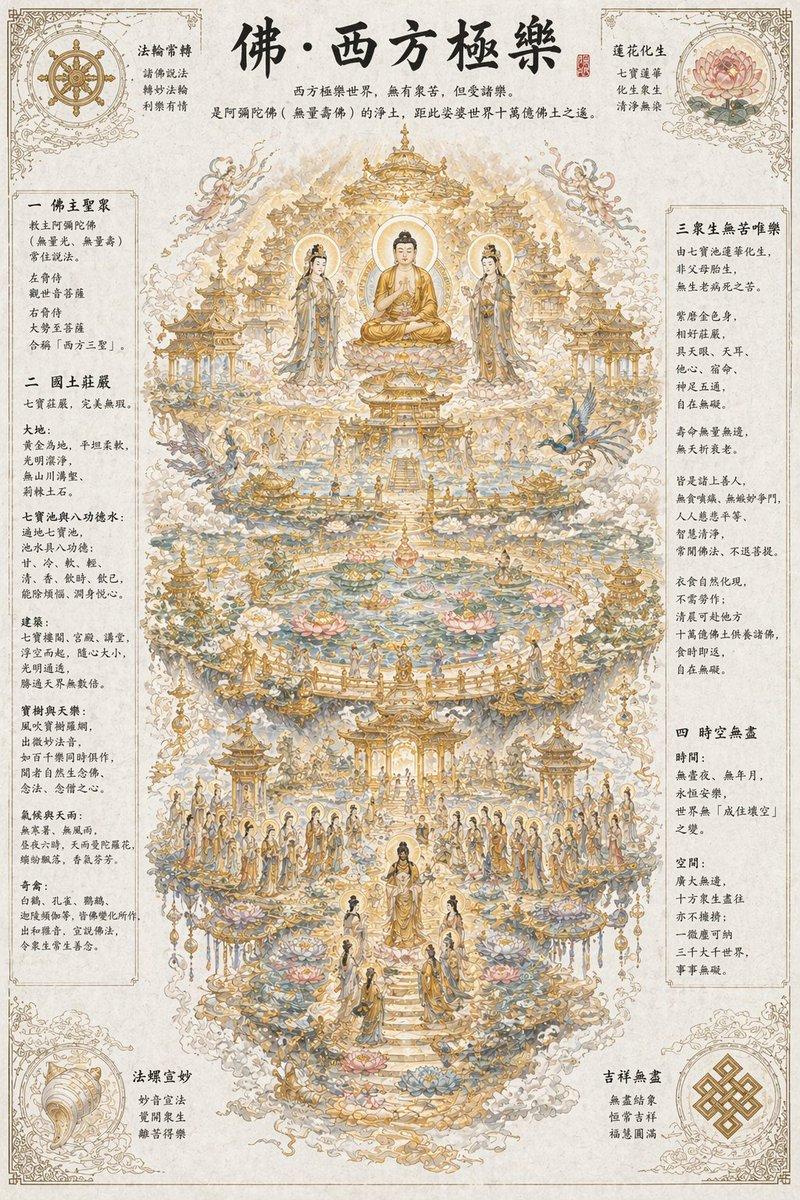
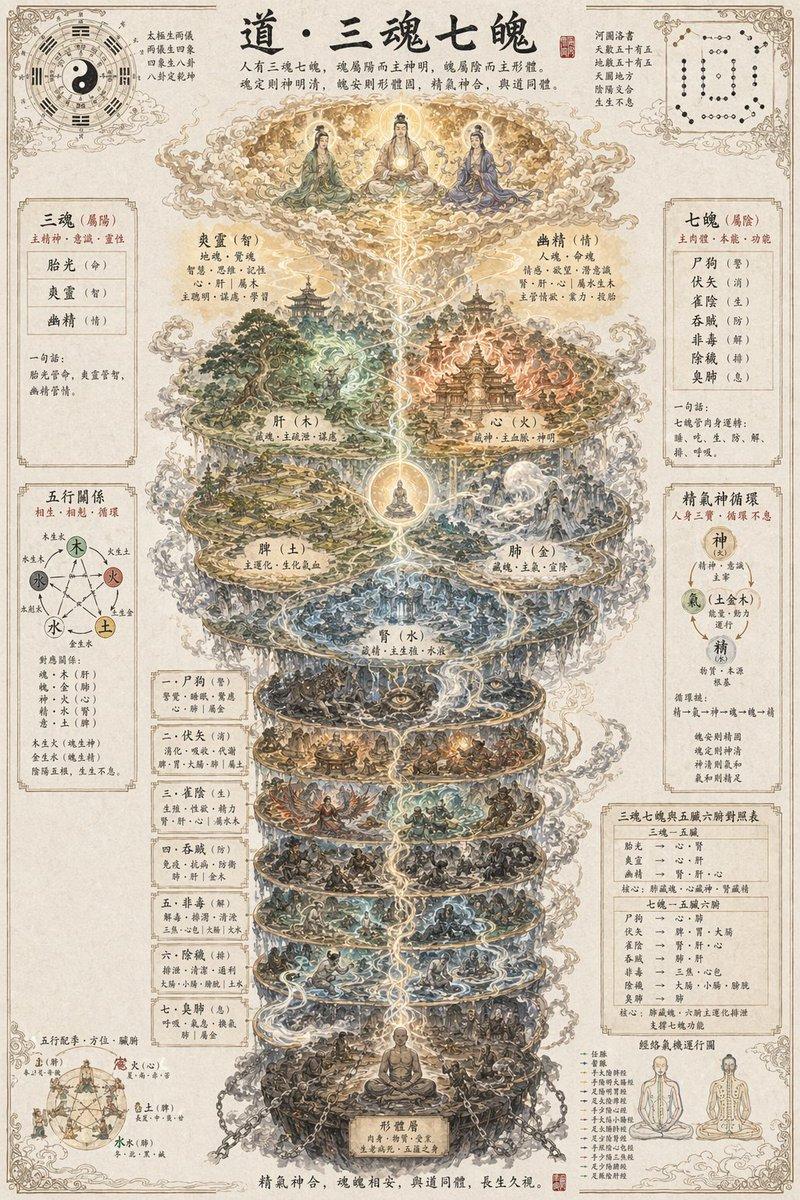
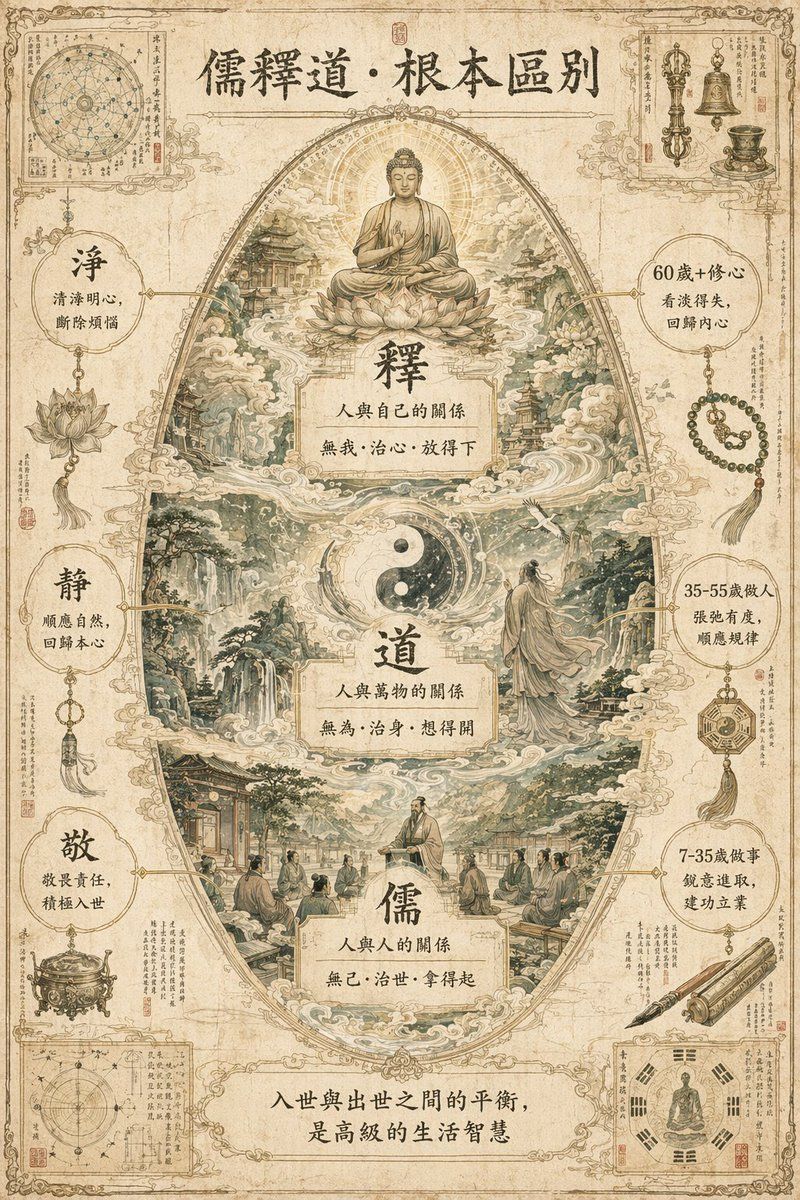
A breathtaking and extremely complex world-building infographic masterpiece conceptualizing the "{argument name="theme" default="Fundamental Differences between Confucianism, Buddhism, and Taoism"}", designed as a profound {argument name="style" default="ancient Oriental mythological manuscript"}.
Background: Pure white vintage textured canvas with a light beige aged parchment base color, subtle frayed edges, and water stain textures.
Core Layout: Central vision uses a grand "vertical egg-shaped layered structure", with Buddhism, Taoism, and Confucianism layers from top to bottom.
Margins: Four corners are decorated with fine micro-illustrations featuring ancient observation notes, ritual implements, and runes.
Colors: Low-saturation sage green, light gold, and off-white as main tones; overall light and soft without harsh high-saturation colors.
Details: Architectural lines, landscape brushwork, lotus patterns, and cloud layers are clearly visible and exquisitely detailed.
Seamless Fusion: The three layers transition naturally through clouds and flowing water; the Buddhist halo, Taoist Taiji mist, and Confucian scholarly aura connect seamlessly.
Style: Classical ink line art + low-saturation digital watercolor, with a light Chinese-style ancient book manuscript texture.
Text Annotations: Authentic Traditional Chinese characters in a mottled vintage Song typeface. Each annotation includes a short title + a line of poetic description, connected to corresponding details by dark gold hair-thin lines with no overlapping pointers.
Aspect Ratio: {argument name="aspect ratio" default="3:4"} vertical format, independent and complete.

Title Area (Top): `儒釋道·根本區別` (Confucianism, Buddhism, Taoism: Fundamental Differences)
Central Layer Labels:
Top "Buddhism": `釋`, `Relationship between man and self`, `Selflessness, governing the heart, letting go`
Middle "Taoism": `道`, `Relationship between man and all things`, `Non-action, governing the body, being open-minded`
Bottom "Confucianism": `儒`, `Relationship between man and man`, `No ego, governing the world, taking responsibility`
Side Annotations:
Left: `Purity`: pure heart and clear mind, cutting off troubles; `Stillness`: following nature, returning to the original heart; `Respect`: respecting responsibility, active involvement in society.
Right: `60+ Spiritual Cultivation`: looking lightly at gain/loss; `35-55 Conduct`: living with flexibility, following laws; `7-35 Actions`: forging ahead, building careers.
Bottom Summary: `The balance between being in the world and being out of the world is high-level life wisdom.`- Category
- Charts & Infographics
- Model
- GPT Image 2
- Creator
- freestylefly
- Source ID
- 65
Views2