人物肖像品牌字标设计指南
Prompt
Please design a high-completeness "Portrait Brand Wordmark Logo" based on the user-inputted [Brand Name / Personal Name] [Subtitle / Product Name] [Type / Industry] [Brand Positioning] [Person Identity] [Person Characteristics] [Professional Attributes] [Emotional Temperament] [Wordmark Style] [Main Color] [Secondary Color] [Aspect Ratio].

[User Input]
Brand Name / Personal Name: [Brand Name / Personal Name]
Subtitle / Product Name: [Subtitle / Product Name]
Type / Industry: [Photography Studio / Coffee Owner / Fitness Coach / Catering Owner / Design Studio / Consultant Brand / Doctor Personal Brand / Self-media IP / Trendy Studio, etc.]
Brand Positioning: [Brand Positioning]
Person Identity: [Photographer / Coffee Owner / Coach / Chef / Designer / Consultant / Teacher / Doctor / Content Owner, etc.]
Person Characteristics: [Hairstyle / Glasses / Beard / Hat / Face Shape / Clothing / Pose / Tools / Temperament Characteristics]
Professional Attributes: [Professional / Trendy / Friendly / Owner Sense / Service Sense / Credibility / Craftsmanship, etc.]
Emotional Temperament: [Professional, Steady, Friendly, Opinionated, Trendy, Credible, Warm, Capable, Down-to-earth, Owner Temperament, etc.]
Wordmark Style: [Modern Rational / Retro Owner / Strength Sports / Handwritten Sign / Street Trend / Professional Studio, etc.]
Main Color: [Main Color]
Secondary Color: [Secondary Color]
Aspect Ratio: [Aspect Ratio]

[Important Rules: If the user uploaded a portrait / personal photo]
If the user provides a reference image of the person, please use that reference image as the basis for the character's image.
Requirements:
1. Retain the core identification features of the person, including but not limited to: face shape, hairstyle, hairline, glasses, beard, hat, facial proportions, clothing silhouette, overall temperament;
2. Do not directly copy the reference photo into a realistic illustration, nor make it a common photo-to-illustration conversion;
3. The reference person must be processed into a logo-like, block-like, symbolic, and artistic form;
4. The goal is to "preserve person recognition + enhance brand sense," not mechanical replication;
5. If the person has obvious professional characteristics or personal style, these should also be preserved and strengthened;
6. If the pose in the uploaded photo is not suitable for a logo, it can be adjusted to a half-body / avatar composition more suitable for a logo while preserving the recognition features.

[If no person photo is uploaded]
If the user does not provide a reference photo, design an original portrait logo that matches the brand positioning based on the user's input of person identity, person characteristics, professional attributes, and emotional temperament.

[Core Goal]
What needs to be designed this time is a "Portrait Brand Wordmark Logo" that truly has a designer sense and brand recognition.
It is not a common avatar illustration, nor is it a simple "avatar + typing" composite image. Instead, it must integrate "person portrait, customized wordmark, professional identity, brand temperament, and a few structural elements" into a complete, commercially usable, communicable, and scalable personal brand logo.

The final effect should look like a main brand logo that a real personal brand, studio brand, owner brand, or professional service brand can use directly.

[Design Essence]
The focus of this type of logo is not to draw the person realistically, but to transform the person into a brand personality symbol:
1. Portrait is responsible for memory points;
2. Brand wordmark is responsible for recognition;
3. Professional characteristics are responsible for positioning;
4. Font design is responsible for style;
5. Composition structure is responsible for completeness.

[Most Important Principles]
1. The person must be the main recognition point, but not like a common illustration avatar;
2. The person must be processed artistically, in blocks, and symbolically;
3. The brand name / person name must be clear and eye-catching, with a sense of a customized wordmark;
4. The wordmark cannot use standard fonts directly; it must have industry temperament and design variations;
5. The person and the wordmark must form a whole, not a mechanical vertical arrangement;
6. The overall look must have a sense of branding, style, and commercial completeness;
7. Don't be too formal, too template-like, or too ordinary; it should have a designer's work feel.

[Portrait Portrait Requirements]
Please design a high-recognition character avatar or half-body image around [Person Identity] and [Person Characteristics].
The character's expression should lean towards logo-ization, using:
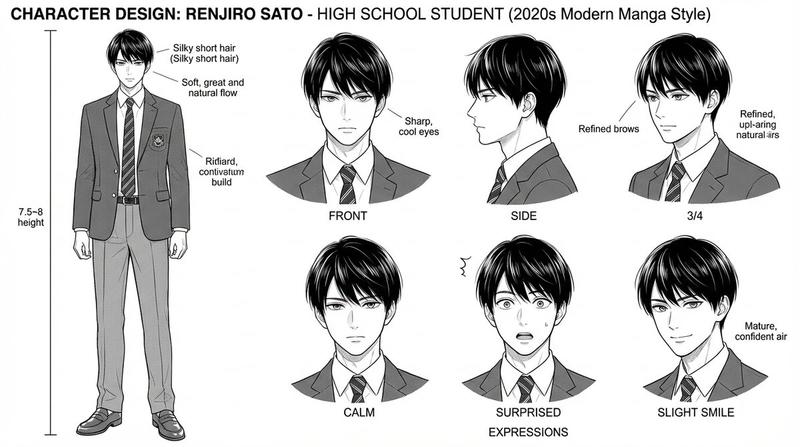
- Black and white block portraits;
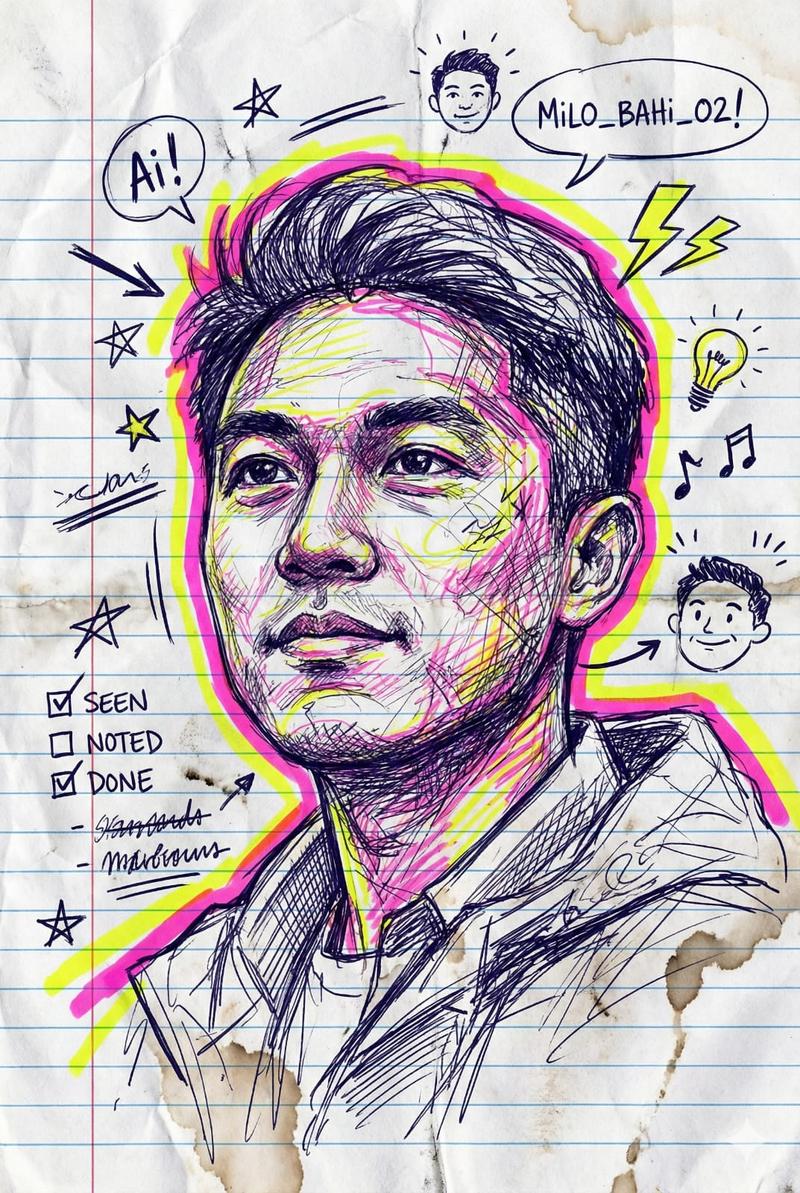
- Flat line-art portraits;
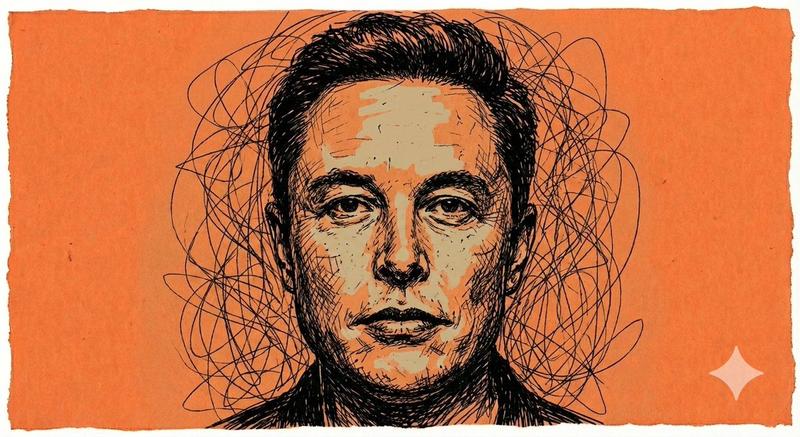
- Print-style portraits;
- Silk-screen poster-style portraits;
- Half-body professional character graphics;
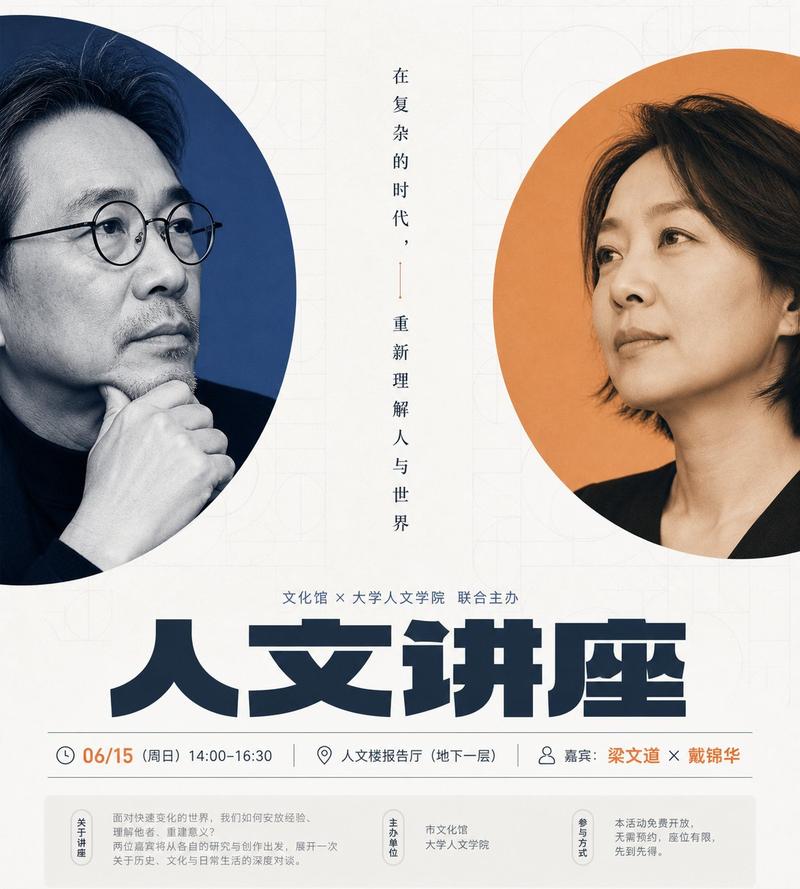
- Character avatars in circular / semi-circular / color block bases.

Person requirements:
1. Retain the most critical personal features, such as hairstyle, glasses, beard, hat, clothing silhouette, face shape, pose;
2. Do not strive for complete realism; use strong generalization and artistic extraction;
3. Strengthen black and white light and shadow blocks to form stronger visual recognition;
4. Allow for slight exaggeration, angle changes, and postural expressions of the character;
5. Professional tools can be added, such as cameras, coffee cups, spatulas, dumbbells, books, pens, headphones, etc.;
6. The character's silhouette must be clear and suitable for recognition even when scaled down;
7. The character should be like a brand symbol, not a common avatar.

[Wordmark Design Requirements]
The brand name / person name must be designed as a stylish wordmark, not ordinary typography. Please choose the corresponding wordmark language according to the industry.

[Relationship Between Portrait and Wordmark]
The person and the text cannot be separated; there must be a structural relationship:
1. The portrait can be pressed above the wordmark;
2. The wordmark can support the character;
3. Semi-circular / color block bases can connect the character and the text;
4. Tools, horizontal lines, ribbons, small seals can serve as connecting structures;
5. The whole should be like a complete logo, not an avatar image + title text.

[Composition Structure Requirements]
The following structures can be selected based on the brand:
1. Person avatar on top, customized wordmark below, auxiliary subtitle;
2. Semi-circle / circular seal portrait base + main wordmark + small sub-mark;
3. Person half-body image + large wordmark + horizontal line / ribbon / small tag;
4. Person on the left, wordmark on the right, suitable for more modern professional brands;
5. The person and the wordmark form an overall badge feel, suitable for coaches, catering, and coffee owners.

Overall requirements:
- Clear primary and secondary;
- Person has memory points;
- Wordmark has a sense of design;
- Moderate white space;
- Suitable for small-scale use;
- Cannot be poster-like.

[Color Requirements]
It is recommended to use black, white, and gray as the main body, paired with 1 emphasis color.

Requirements:
1. Restrained colors but with memory points;
2. The emphasis color is used for bases, horizontal lines, ribbons, small seals, and auxiliary graphics;
3. Don't use too many colors;
4. Don't use cheap gradients;
5. Don't look like a common cartoon avatar.

[Auxiliary Element Requirements]
A small number of design structural elements can be added to enhance completeness:
- Semi-circular base;
- Circular badge;
- Horizontal line;
- Small seal;
- Ribbon;
- ESTD year;
- English subtitle;
- Slogan;
- Small professional icon;
- Signature-style handwriting;
- Small red seal / small color block.

Auxiliary elements must serve the overall composition and cannot become piled-up decorations.

[Visual Presentation Requirements]
1. This is a standalone logo display image, not a poster;
2. The background is clean, recommending white, off-white, or light gray backgrounds;
3. The main body of the logo is clear and complete;
4. The portrait has artistic processing;
5. The wordmark has a customized design feel;
6. The person, text, and professional attributes are unified;
7. Suitable for use in scenarios such as avatars, business cards, storefronts, social media, brand packaging, work uniforms, stickers, etc.

[Style Keywords]
Portrait Brand Wordmark Logo, Portrait Brand Wordmark Logo, personal branding logo, stylized portrait logo, custom wordmark, portrait identity design, founder logo, studio logo, designer-style logo, black and white block portrait, brand personality mark.

[Acceptance Criteria]
Please ensure the final result meets:
1. The person is recognizable as the main character at a glance;
2. The brand name is recognizable at a glance;
3. If there is a reference photo, the person's image should maintain a clear identification link with the reference photo;
4. The portrait has artistic processing, not a common avatar;
5. The wordmark has a customized feel, not ordinary typography;
6. The person and the wordmark form a complete logo;
7. Restrained color matching but with brand memory points;
8. Can reflect professional identity;
9. Suitable for commercial use and social communication.

[Output Requirements]
Please finally output a high-completeness "Portrait Brand Wordmark Logo".
If the user uploaded a portrait photo, please perform logo-ization and artistic reconstruction while retaining the core identification features of the person;
If no photo is uploaded, design the person's image according to the text settings.
The final product must be a concise, professional, memorable, and complete logo with a designer's work feel.
- Category
- Posters & Typography
- Model
- ChatGPT
- Creator
- @MrLarus
- Source ID
- 14952
- Published
- May 24, 2026
Views74