哥特式 Undine 浪漫主义海报
Prompt
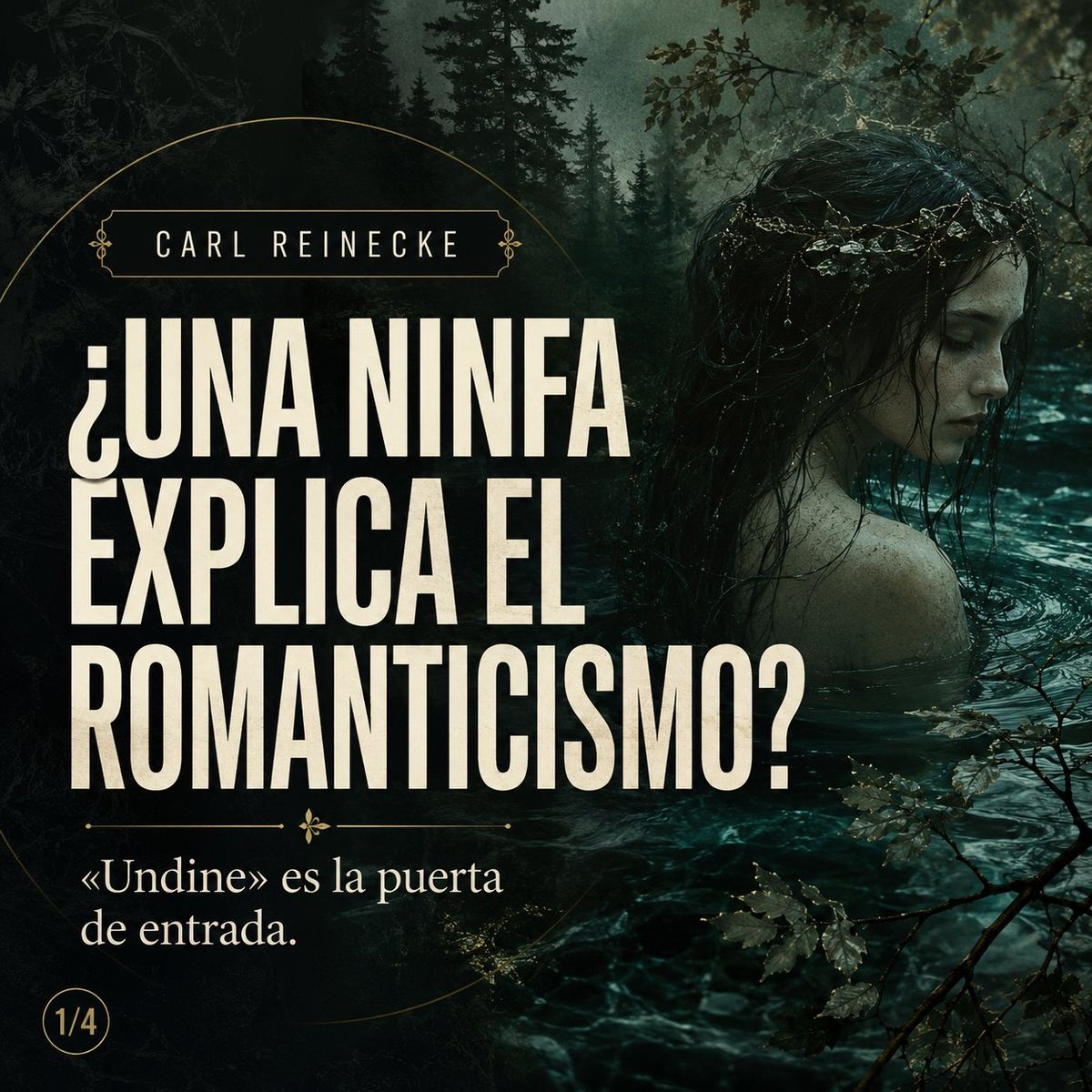
Goal: Create a dark Gothic editorial poster about Romanticism and the water-nymph story Undine, combining a cinematic forest-river scene with large Spanish typography.

Canvas: Square 1:1 social media post, 768×768 style composition, moody high-contrast lighting, deep teal/black palette with warm ivory text and thin antique-gold ornament lines.

Background and subject: A misty Germanic forest at night surrounds a cold dark river. On the right half, show the back and partial profile of a pale aquatic nymph emerging waist-deep from the water, with long wet black hair tangled with small twigs or pearls. Her face is mostly hidden by a solid dark rectangular block placed over the upper-right facial area. Add rippling water, submerged shoulders, wet skin, silhouetted pine trees, branches and leaves in the foreground, and a mysterious Romantic-era atmosphere.

Layout: Left side dominated by typography; right side dominated by the nymph and water. Add a very thin antique-gold circular arc starting near the upper left and curving around the text, plus small decorative flourishes and divider ornaments. Place a small framed author label at the top left. Place a small circular page marker at the bottom left.

Text content: At the top left, inside a thin gold rectangular label with small ornamental ends, write {argument name="author name" default="CARL REINECKE"}. Center-left, in huge condensed bold uppercase ivory letters, stack the headline across four lines: {argument name="headline text" default="¿UNA NINFA EXPLICA EL ROMANTICISMO?"}. Beneath the headline, add a thin decorative divider line with a small gold floral ornament in the center. Below it, write the subtitle in an elegant serif font: {argument name="subtitle text" default="«Undine» es la puerta de entrada."}. Bottom-left page badge: a small thin gold-outlined circle containing {argument name="page number" default="1/4"}.

Typography and style: Use tall condensed poster type for the headline, creamy off-white ink, slightly aged print texture, subtle grain, and a classical literary-magazine look. Use an elegant serif for the subtitle and narrow spaced capitals for the author label.

Constraints: Keep exactly these 4 visible text elements: author label, headline, subtitle, and page marker. Do not add logos, watermarks, extra captions, or additional people. Maintain strong legibility despite the dark forest background.- Category
- Posters & Typography
- Model
- GPT Image 2
- Creator
- Juan José Arango E.
- Source ID
- 26281
- Published
- Jun 19, 2026
Views1